Converting a contact lens prescription to glasses involves adapting the vision correction specifications. From contact lenses to eyeglasses. This process ensures that the corrective lenses in glasses match the individual’s vision needs.It allows for comfortable and accurate eyesight correction.
You think how to seamlessly transition from contact lenses to glasses.Discover the art of “How To Convert Contact Lens Prescription To Glasses? unlock a hassle free method for adapting your vision correction. This insightful process ensures your eyeglasses align perfectly with your contact lens prescription.it guaranteeing optimal comfort and clarity.
Converting a contact lens prescription to glasses involves translating the vision correction details from one form to another. It ensures that the eyeglasses provide the same level of vision clarity as the contact lenses.This process helps individuals seamlessly switch between the two forms of corrective eyewear.It maintains accurate vision correction.
How should I get my contact lens prescription?
To obtain your contact lens prescription, start by scheduling an eye exam with an optometrist or ophthalmologist.During the examination, the eye care professional will assess your vision and fit you with contact lenses.When deemed suitable.They will provide you with a prescription that includes details like the lens power, base curve and diameter. Make sure to ask for a copy of your prescription.
when you already have an eyeglass prescription. keep in mind that it might not be the same as a contact lens prescription. Contact lenses sit directly on the eye. requiring additional parameters for a proper fit.It is crucial to have a specific contact lens prescription to ensure the lenses are comfortable .It provides the correct vision correction.
Power (Sphere):
Indicates the strength of the lens needed to correct nearsightedness (negative value), farsightedness (positive value) or astigmatism (cylinder and axis values).
Base Curve (BC):
Specifies the curvature of the back surface of the lens, ensuring a proper fit on the cornea.
Diameter:
Represents the width of the contact lens, influencing how it fits on the eye.
Cylinder:
If you have astigmatism, this value denotes the amount of lens power needed for astigmatism correction.
Axis:
Works in conjunction with the cylinder value, specifying the orientation of the astigmatism correction on the lens.
Addition (for multifocal lenses)
If you require correction for presbyopia.This value indicates the additional power
needed for reading or close up vision
Brand and Material:
Specifies the type and material of the contact lenses prescribed by the eye care professional.
Is There A Difference Between Contact Lens And Glass Prescription?
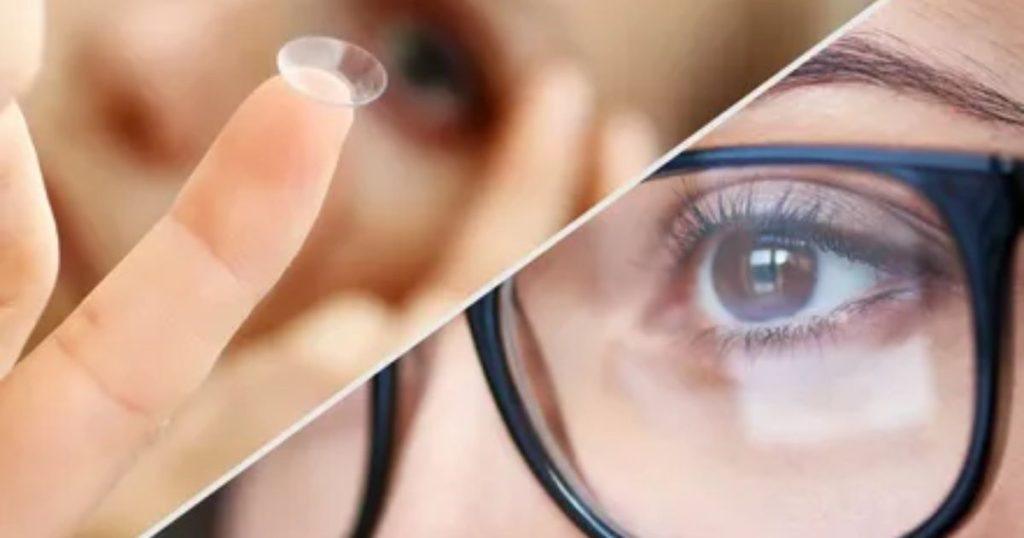
There is a difference between contact lens and eyeglass prescriptions. While both prescriptions are intended to correct vision.The way they are written varies.Contact lens prescriptions include additional specifications such as the curvature of the lenses and the diameter.Which are crucial for proper fit and comfort.
On the other hand eyeglass prescriptions primarily focus on lens power and may have different values due to the distance between the eyes and the lenses.It is essential to use the correct prescription for the intended type of eyewear to ensure optimal vision correction. Consulting with an eye care professional will help you understand the distinctions .Guarantee that your contact lenses or glasses provide the right prescription for your eyes.
Vertex Conversion Chart For Contact Lenses
| Power (Diopters) | Flat/Base Curve (mm) | Median Curve (mm) | Steep Curve (mm) |
| -12.00 | 8.4 | 8.6 | 8.8 |
| -10.00 | 8.4 | 8.6 | 8.8 |
| -8.00 | 8.6 | 8.8 | 9.0 |
| -6.00 | 8.6 | 8.8 | 9.0 |
| -4.00 | 8.8 | 9.0 | 9.2 |
| -2.00 | 8.8 | 9.0 | 9.2 |
| 0.00 | 8.8 | 9.0 | 9.2 |
| +2.00 | 9.0 | 9.2 | 9.4 |
| +4.00 | 9.0 | 9.2 | 9.4 |
| +6.00 | 9.2 | 9.4 | 9.6 |
| +8.00 | 9.2 | 9.4 | 9.6 |
| +10.00 | 9.4 | 9.6 | 9.8 |
| +12.00 | 9.4 | 9.6 | 9.8 |
Considerations and Adjustments
When it comes to contact lenses, considering certain factors and making adjustments is essential for a comfortable and effective experience.Individuals need to be mindful of their prescription power. Different powers require specific base curves. Consulting with an eye care professional helps in determining the right fit.
Making adjustments involves assessing the comfort and clarity of vision.Regular check ups with an eye care provider are important to ensure. that any necessary adjustments are made promptly “How To Measure Glasses For Clip On Sunglasses?” Promoting overall eye health and optimal contact lens usage also include.
Differences In lens Design And Fit
Adapting a contact lens prescription to glasses necessitates adjustments in design and fit. The unique curvature of contact lenses contrasts with that of glasses.It prompting precise modifications for optimal vision correction.
Comfort and optimal vision with glasses
precise adjustments in power and base curve are crucial. Seek guidance from an eye care professional for a seamless transition, maintaining clarity and comfort in both forms of eyewear.
Common issues during the conversion and how to resolve them
- Prescription Discrepancies:
- Issue: Differences between contact lens and glasses prescriptions may arise due to the distance between the lens and the eye.
- Resolution: Consult with an eye care professional to adjust the prescription for proper conversion.
- Base Curve Variations:
- Issue: Contact lenses have a base curve specific to the eye, whereas glasses use a different curve. Mismatch can cause discomfort and vision issues.
- Resolution: Opt for glasses with a base curve that closely matches the contact lens prescription or consult an optometrist for adjustments.
- Cylinder and Axis Adjustments:
- Issue: Astigmatism corrections in contact lenses may differ in glasses prescriptions, leading to blurred vision.
- Resolution: Ensure the cylinder and axis values are accurately translated and consult an eye care professional for fine tuning.
- Pupillary Distance (PD) Accuracy:
- Issue: Incorrect PD measurement can affect the alignment of the lenses, causing eye strain and discomfort.
- Resolution: Have an optician measure the PD accurately or use online tools cautiously for self measurement.
- Material and Coating Differences:
- Issue: The choice of lens material and coatings may differ between contacts and glasses, impacting visual clarity and comfort.
- Resolution: Select glasses with materials and coatings that replicate or enhance the features of the contact lenses. Consult with an optometrist for guidance.
- Adaptation Period:
- Issue: Transitioning from contact lenses to glasses may require an adjustment period due to variations in peripheral vision and depth perception.
- Resolution: Wear the glasses consistently to allow your eyes to adapt, and consult with an eye care professional if discomfort persists.
- Prescription Age and Changes:
- Issue: Prescriptions change over time and a direct conversion may not account for these adjustments.
- Resolution: Have regular eye exams to ensure your prescription is up to date.Consult with an optometrist for any necessary modifications during the conversion process.
- Lens Thickness and Aesthetics:
- Issue: The prescription conversion may result in thicker lenses, affecting the appearance of the glasses.
- Resolution: Choose lens materials that offer thinner options and consider frame styles that minimize the visual impact of thicker lenses.
- Visual Distortion and Aberrations:
- Issue: Differences in optical properties between contacts and glasses may cause visual distortions or aberrations:
- Resolution: Opt for high quality lenses and coatings and communicate any visual issues to your eye care professional for further adjustments.
- Comfort and Fit:
- Issue: Glasses may feel different from contact lenses, affecting comfort and fit.
- Resolution: Experiment with different frame styles and fits and consult with an optician to find glasses that provide optimal comfort for extended wear.
How should I convert my contact lens to astigmatism?

It is suitable for astigmatism in glasses and is crucial for maintaining clear vision. Begin by discussing the specific astigmatism details in your contact lens prescription with your eye doctor. Astigmatism prescriptions have two key components.they are cylinder and axis. Accurately transferring these values to your new glasses prescription is essential.
Select glasses with the correct astigmatism values, focusing on the right cylinder and axis. Confirm an accurate pupillary distance for proper alignment. If discomfort arises, consult your eye care professional for adjustments. Successful conversion to astigmatism glasses requires clear communication and thoughtful frame selection with your eye doctor.
Importance of consulting an eye care professional if needed?
Precision in Prescription:
- Ensure accurate assessment of your vision needs.
- Professional expertise aids in precise prescription adjustments.
Individualized Recommendations:
- Receive personalized guidance based on your unique eye health and lifestyle.
- Professionals consider factors such as astigmatism, presbyopia, and overall eye health.
Detection of Underlying Issues:
- Eye care professionals can identify and address potential eye health issues.
- Timely detection contributes to preventive care and overall well being.
Proper Lens Fitting:
- Ensure lenses are fitted correctly to avoid discomfort and visual distortions.
- Professional guidance helps in determining the right frame and lens combinations.
Adaptation and Comfort:
- Professionals assist in managing any discomfort during the transition to new prescriptions.
- Ensure a smooth adaptation period with expert advice.
Updates and Adjustments:
- Regular consultations allow for updates to changing prescriptions.
- Prompt adjustments can be made in response to any vision changes or discomfort.
Specialized Solutions:
- Access to specialized treatments or lenses for conditions like astigmatism, presbyopia, or dry eyes.
- Professionals provide tailored solutions to meet specific visual needs.
Educational Insights:
- Gain valuable information about eye health and proper eye care practices.
- Professionals offer guidance on maintaining optimal vision and preventing potential issues.
Long Term Eye Health:
- Regular consultations contribute to the long term health of your eyes.
- Professional advice supports preventive measures and early intervention when necessary.
Customized Care Plans:
- Develop personalized eye care plans based on your lifestyle, age and overall health.
- Professionals can recommend strategies for maintaining eye health in various life stages.
Frequently Asked Question
Can you convert contact prescriptions to eyeglasses?
Contact prescriptions cannot be directly converted to eyeglasses prescriptions .They differ due to factors like vertex distance and base curve.
What does 2.75 vision mean?
A vision of 2.75 typically refers to a visual of personality. It suggests moderately impaired eyesight.
Can I use my contact lenses prescription for glasses?
Contact lens prescriptions and glasses prescriptions are not interchangeable
Is contact lens prescription stronger than glasses?
The prescription strength for contact lenses and glasses may differ based on individual needs.
Does 0.25 make a difference in glasses?
0.25 difference in glasses prescription can be noticeable for some individuals.It particularly in terms of clarity and visual comfort.
Final Thought
Understanding and maintaining eye health is crucial. Regular eye check ups.Whether for contact lenses or glasses. They are essential to ensure optimal vision and overall well being. Remember to follow your eye care professional’s advice and prescription guidelines for the best results.
you wear contact lenses but are considering switching to glasses.A common question arises that“How do you convert your contact lens prescription to glasses?” Consulting with your eye care specialist is the best way .It is to navigate this transition.Ensure that your vision needs are met. They can provide guidance on adapting your prescription to glasses.It helps you make a smooth and comfortable switch.

Expert in glasses with 8 years of experience, Isabella Lane dives into the world of eyewear. Explore their insightful content on the latest trends, lens technology and styling tips for a clearer vision.